Permanent residency
Permanent residency in Japan: requirements, fee and the 2027 changes
Japan permanent residency requirements: usually 10 years of stay, clean tax and pension records, and a ¥200,000 fee from October 2026. Plus 2027 changes.
Visa & residencyNaturalization
The Japanese naturalization process runs through your Legal Affairs Bureau. Since April 2026 it expects 10 years in Japan in principle. Steps, documents, time.


As of October 2026, the Japanese naturalization process (帰化) starts with a consultation at the Legal Affairs Bureau (法務局) for your address, then document collection, an in-person application, review and a decision by the Minister of Justice, published in the Official Gazette. The law requires 5 years in Japan, but since April 1, 2026 the Ministry expects 10 years in principle, and checks 5 years of taxes and 2 years of social insurance. There is no fee. You must give up your current nationality in principle.
The Japanese naturalization process (帰化, kika) runs through the Legal Affairs Bureau (法務局, hōmukyoku) for your address, not the immigration office. You book a consultation, collect documents, apply in person, go through review, and the Minister of Justice decides. Approval is published in the Official Gazette (官報). The law requires 5 years in Japan, but since April 1, 2026 the Ministry of Justice expects 10 years in principle. There is no fee. This is the position as of October 2026.
Article 5 of the Nationality Act (国籍法) sets six conditions. The Ministry of Justice says they are minimums: meeting them does not guarantee approval.
| Condition | What it means |
|---|---|
| Residence | 5+ years of continuous domicile in Japan, on a valid status of residence (在留資格) |
| Age and capacity | 18 or older, and an adult under your home country’s law |
| Good conduct | Judged on criminal record, tax payment and conduct in society |
| Livelihood | You can live on your own or your household’s income or assets |
| One nationality | You are stateless, or you lose your current nationality on naturalizing |
| Constitution | You have never planned or supported the violent overthrow of the government |
The Ministry also requires Japanese good enough for daily life, in speaking, reading and writing, and integration into Japanese society.
The Minister of Justice announced on March 27, 2026 that, from April 1, naturalization review requires in principle 10 years of stay as part of “integration into Japanese society”. The checking period for taxes and social insurance also got longer. The Ministry’s leaflet now lists 10+ years of stay as an example of integration.
Kyodo News reported the details from the Ministry: taxes are now checked for 5 years instead of 1, and social insurance for 2 years. Kyodo also reported the new approach applies to people who applied before April 1.
The Nationality Act did not change. The 5-year legal minimum still applies, and 10 years is now the operating standard on top of it.
Articles 6 to 8 of the Nationality Act relax some conditions for people with close ties to Japan.
| Who | What the law relaxes |
|---|---|
| Spouse of a Japanese national with 3+ years living in Japan | 5-year residence and age conditions |
| Spouse of a Japanese national married 3+ years, with 1+ year living in Japan | 5-year residence and age conditions |
| Born in Japan, with 3+ years in Japan (or a parent born in Japan) | 5-year residence condition |
| Child of a former Japanese national, with 3+ years in Japan | 5-year residence condition |
| Person who has lived (居所) in Japan for 10+ years | 5-year residence condition |
| Child of a Japanese national, living in Japan | Residence, age and livelihood conditions |
| Adopted child of a Japanese national, 1+ year in Japan, a minor when adopted | Residence, age and livelihood conditions |
Good conduct, the one-nationality rule and the constitution condition still apply to these routes.
While your application is pending, tell the bureau promptly if anything changes: a new address, marriage or divorce, a birth, a visa renewal, a trip abroad, a job change, or any violation of the law, including traffic violations.
The Ministry’s guide (帰化許可申請のてびき, April 2026 edition) lists, among others:
Most documents are needed in 2 sets: one original and one copy. Use A4 paper and a black pen, not an erasable pen. Every foreign-language document needs a full Japanese translation with the translator’s name, address and date. The translator can be anyone who translates accurately, including you.
Yes, in principle. You must be stateless or lose your current nationality when you become Japanese. If your country’s law takes away its nationality automatically on naturalizing (the guide gives Korea as an example), you don’t need a loss certificate. Otherwise the bureau may ask for a certificate from your government showing you have lost, or will lose, that nationality.
The Minister can make an exception only if you cannot give up your nationality by your own will and have special family ties or circumstances in Japan.
Fee
None
The Ministry of Justice charges no fee. It sets no standard processing period and lists no administrative appeal.
The Ministry publishes no processing time. One administrative scrivener office that handles naturalization reports about 1 year from application to Gazette publication, depending on your status and the bureau’s workload. Add the time it takes to collect home-country documents before you apply.
Once naturalized, you are no longer under residence control by immigration, according to ISA. But you also give up your current citizenship in principle. Many long-term residents compare it with permanent residency (永住) first: see permanent residency vs naturalization and the permanent residency requirements.
More guides: spouse visa in Japan, visa renewal in Japan.
The Nationality Act requires 5 years of continuous domicile. Since April 1, 2026, the Ministry of Justice also expects, in principle, 10 years of stay as proof of integration. Spouses of Japanese nationals and some others have shorter legal routes.
In principle, no. The Nationality Act requires you to be stateless or to lose your current nationality on naturalizing. The Minister can waive this only if you cannot give up your nationality by your own will and have special ties to Japan.
The Ministry of Justice charges no fee for a naturalization application. Applying for the separate permanent residency costs ¥200,000 from October 2026, so this is one practical difference.
The Ministry sets no standard processing period. Administrative scriveners who handle naturalization report about 1 year from application to publication in the Official Gazette, depending on the bureau and your situation.
From April 1, 2026 the Ministry of Justice expects, in principle, 10 years of stay, and checks 5 years of tax payments and 2 years of social insurance. The Nationality Act itself did not change. Kyodo reported the Ministry also applies this to applications made before April.
Spotted something out of date or wrong? Email [email protected] and we will check it against the source. See our corrections policy.
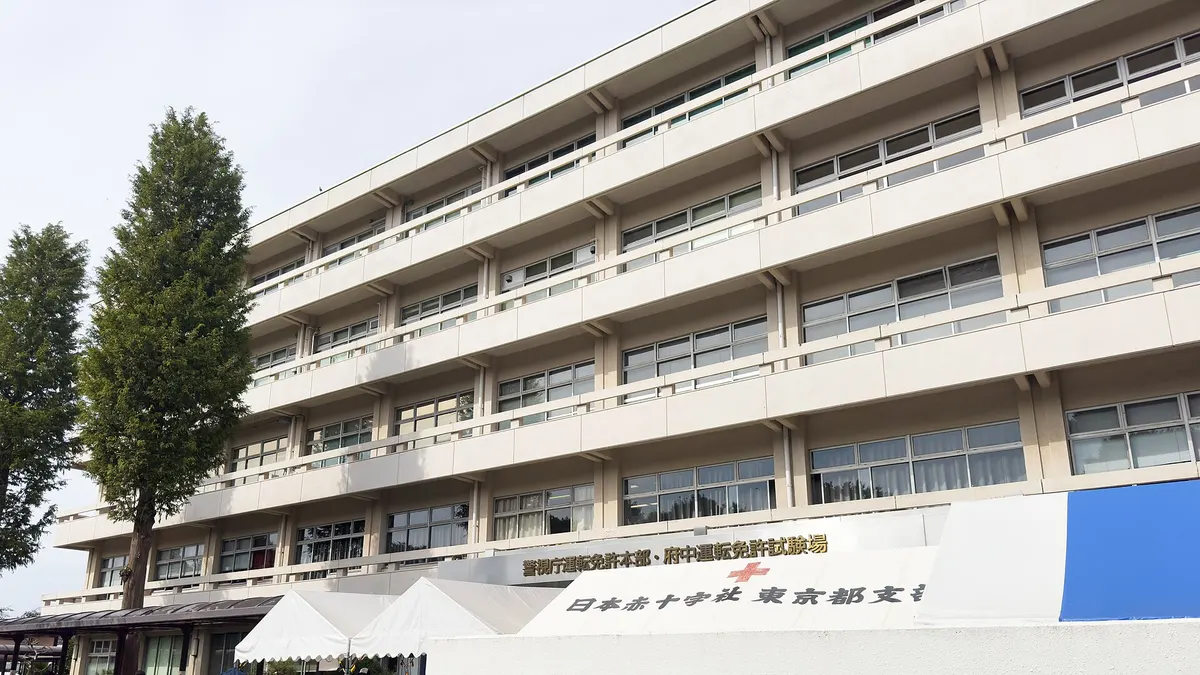
Photo: Suikotei / CC BY-SA 4.0
Permanent residency
Japan permanent residency requirements: usually 10 years of stay, clean tax and pension records, and a ¥200,000 fee from October 2026. Plus 2027 changes.
Visas and renewals
Japan's spouse visa (日本人の配偶者等) lets you live and work without limits. Documents, periods of stay, renewal fees and the 14-day divorce rule.
Licenses
To convert a foreign driver's license in Japan you need 3+ months in the issuing country, a 住民票 and, since Oct 2025, a 50-question test with a 90% pass mark.